

Understanding Secondary Sanctions: Implications and Strategies
Secondary sanctions have emerged as a pivotal component of modern international relations, particularly in the realm of economic sanctions. These measures extend beyond the primary targets of sanctions, affecting third parties that engage with the sanctioned entities. For a detailed exploration of this concept, you can refer to Secondary Sanctions. In this article, we will delve into the nature of secondary sanctions, their implications for global trade, and the strategies entities can employ to navigate the complex landscape of compliance.
What are Secondary Sanctions?
Secondary sanctions are penalties imposed by a country upon foreign entities or individuals that engage in activities with a primary sanctioned state or individual. Unlike primary sanctions that directly target specific nations or individuals by prohibiting their trade, transactions, or financial interactions, secondary sanctions aim to indirectly coerce other nations or companies into complying with the sanctions regime set by the sanctioning country. This can create a climate where even non-sanctioned entities must consider the risks of their business relationships and transactions.
The Evolution of Sanctions
The use of sanctions has a long history, often used as a tool to exert pressure on nations or groups to alter their behavior without resorting to military action. Historically, sanctions have included a variety of measures, from trade embargoes to asset freezes. However, with the globalization of economics and interdependence among nations, the rationale for secondary sanctions has gained traction, particularly in the context of U.S. foreign policy.
Key Examples of Secondary Sanctions
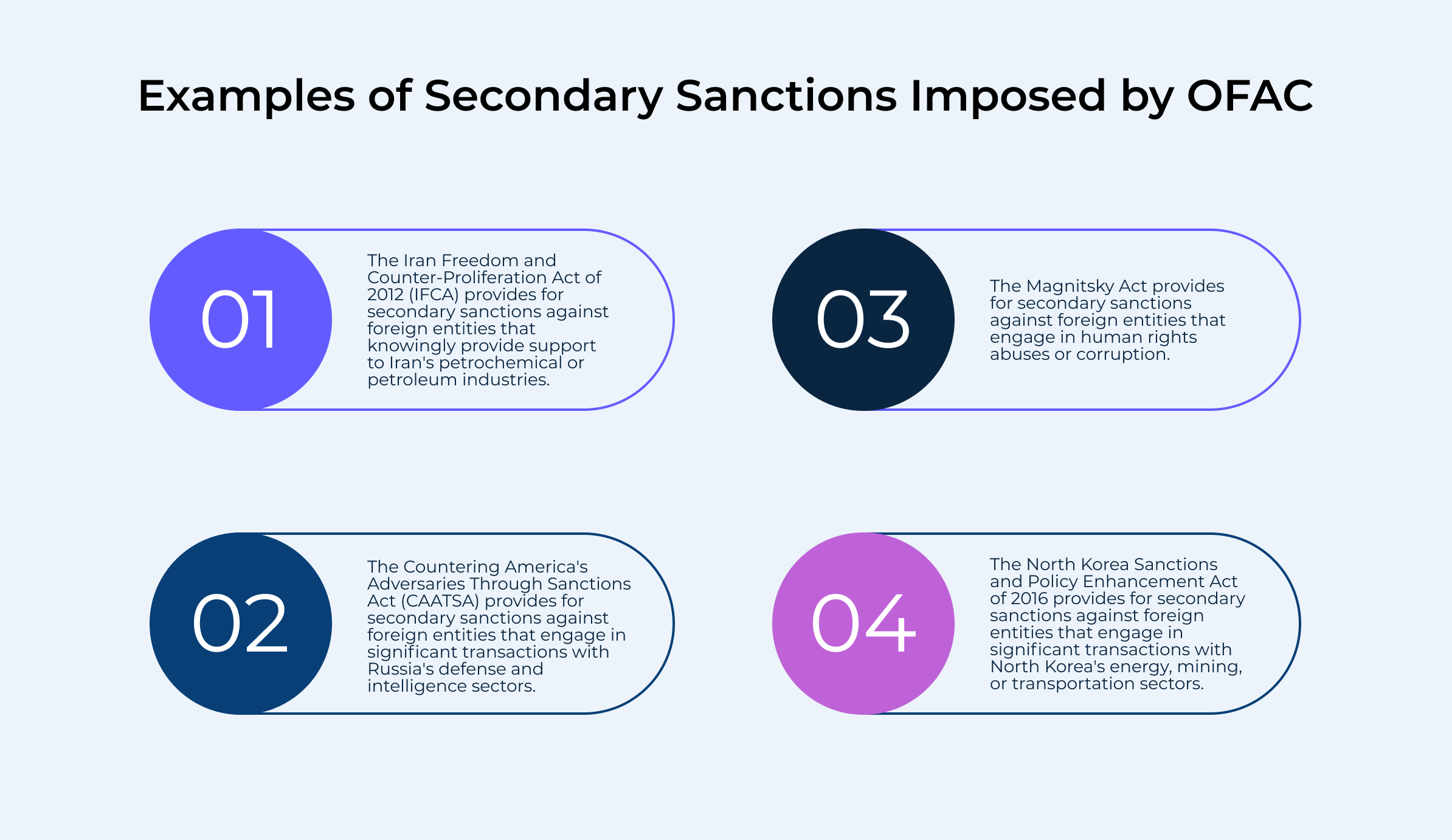
One of the most notable examples of secondary sanctions is the U.S. sanctions against Iran. After the 1979 Iranian Revolution, the U.S. imposed direct sanctions on Iran; however, the introduction of secondary sanctions aimed to pressure foreign governments and companies from engaging in trade with Iran, effectively isolating the country on the global stage. Similarly, secondary sanctions have been applied to North Korea and Russia, particularly following geopolitical tensions and international disputes.
Implications for International Trade
The implementation of secondary sanctions has profound implications for international trade. Companies must be acutely aware of the geopolitical landscape and the potential repercussions of their business dealings. The fear of incurring secondary sanctions can lead to a de facto trading isolation of sanctioned countries, even when those countries have not been directly sanctioned in the past. For instance, European companies conducting legitimate business with Iran may find themselves at risk if they are seen to be circumventing U.S. sanctions, leading to a chilling effect on international relationships.
Compliance Challenges
Navigating the landscape of secondary sanctions presents numerous compliance challenges for companies. Firms must implement robust compliance programs that include thorough due diligence on partners and transactions. This can involve extensive legal consultations and continuous monitoring of changes in the sanctions landscape. Additionally, businesses must train employees on the implications of secondary sanctions to avoid inadvertent violations that could result in significant fines and penalties.
Strategic Responses to Secondary Sanctions
Companies affected by secondary sanctions can adopt a variety of strategies to mitigate risks. One approach is enhancing transparency in operations to build trust with stakeholders. Engaging with legal experts who specialize in sanctions law is essential for staying abreast of developments and interpreting how sanctions may impact business operations. Moreover, companies may explore alternative markets or adjust their supply chain strategies to minimize exposure to risk.
The Role of International Cooperation
While secondary sanctions can be a powerful tool for one nation to exert influence, they can also lead to tensions in international relations. Countries affected by U.S. secondary sanctions have sought to strengthen ties with other nations to counterbalance the impact. This has led to discussions of developing alternative financial systems to bypass reliance on the U.S. dollar, t

hereby diminishing the effectiveness of secondary sanctions. International cooperation and dialogues will be paramount in addressing the complexities of sanctions enforcement.
Conclusion
Secondary sanctions have emerged as a significant factor in international economics and diplomacy. As they continue to evolve, companies engaged in global trade must remain vigilant, informed, and proactive in their compliance efforts. Balancing the demands of economic cooperation while adhering to sanctions regimes presents both challenges and opportunities. Understanding the dynamics of secondary sanctions is imperative for businesses navigating today’s complex global landscape. Through strategic planning and effective compliance measures, companies can better position themselves to operate responsibly and sustainably in a world increasingly impacted by sanctions.